Saturday, November 22, 2025

The Ultimate 1-Day Kyoto Itinerary: Course 1: Kiyomizu-dera, Higashiyama, Gion, and Fushimi Inari Taisha

Kiyomizu-dera Temple

Summary

Welcome to my ultimate itinerary in Kyoto! This is Kyoto Itinerary Course 1, a beautifully crafted route covering the historic Kiyomizu-dera Temple, the atmospheric Higashiyama & Gion Districts, and the iconic Fushimi Inari Taisha Shrine.

Higashiyama and Gion districts are the beating heart of old Kyoto. We’ll wander through countless essences of history within a compact 3km stretch. The core route is an hour of scenic walking, plus the time you'll spend enjoying the views, allowing for flexible customization.

As the Higashiyama area is mostly downward from south to north, we begin with Kiyomizu-dera Temple, ensuring a largely descending walk from there. We flow through Sanneizaka (Sannenzaka), Nineizaka (Ninenzaka), Yasaka Pagoda, Nene’s Path, and reach Maruyama Park, which is next to Chion-in Temple and Yasaka Shrine. Walking through Yasaka Shrine, we cross Higashioji-dori Street, walk along Shijo-dori Street, and get to Hanamikoji Street, the home of Geisha culture. This street leads to Kenninji Temple, one of the most prestigious Zen temples. Walking back north, we’ll reach the picturesque Gion Shirakawa, where you can stroll the scenic canalside past the Tatsumi Bridge and Tatsumi Shrine. When you walk a bit to the south, you’ll find Minamiza Theatre on the corner of Shijo-dori Street and the riverside. It’s the birthplace of Kabuki theatrical performance. It’s been operating at the same location for over 400 years, with the current building dating back to 1929.

Around Minamiza Theatre, head underground to Gion-Shijo Station of the Keihan Railway. A local train takes you to Fushimi Inari Taisha Shrine in less than 10 minutes, which is one of the most popular places in Kyoto. As it can be visited 24/7, you can freely add it to your wonderful trip.

This is the basic course. With so many incredible spots to explore, please be mindful of the time you spend in each venue on this course. I've added short descriptions for the key venues below, as this course is packed with charming spots. If you want to know more, please watch other articles or simply remind me for further detailed information about each location.


Kiyomizu-dera Temple

Established in the 8th century, it’s a UNESCO World Heritage site. The iconic wooden stage has a breathtaking panorama. Imagine the view covered with cherry blossoms in spring or vibrant autumn leaves! This masterpiece of carpentry doesn’t use any single metal nail. I will put them aside and focus on the tour course. Most people spend 1–2 hours here.

Now, here's a crucial travel hack. Access to this temple is always a headache for all tourists. It’s crowded in the daytime. Also, it’s on a steep hillside, and the main path, Kiyomizu-michi Street, is a killer walk-up from Higashioji-dori Street (also known as Higashiyama-dori Street), which has bus stops. Train stations are further more by 10–15 minute walk. We want to avoid walking up this slope as we have a long day ahead.

Main Gate of Kiyomizu-dera Temple
This is the admission-free zone.

Pro-tip: This path turns pedestrian-only from 8:00 a.m. to 7:00 p.m., which means a taxi or Uber can bring us up there right in front of the temple gate until 8:00 a.m., though it should be slightly before it as our taxi needs to go back.

In the daytime after 8:00 a.m., a taxi or Uber has to drop us off at the corner of Sanneizaka. It’s about halfway up the slope and still better than a bus and train. But this area is notorious for crowds and traffic jams. It’s better to step off when your car stops going ahead. For the same reason, I don’t recommend driving there yourself.

The temple itself opens from 6:00 a.m. to 6:00 p.m., and it’s extended to 9:00 or 9:30 p.m. when it has a light-up event in spring, summer, and autumn. The admission-free zone around the temple is accessible 24/7, offering perfect opportunities for beautiful photos, especially at dawn. Considering these factors, the best time to beat the crowds and the hill is early in the morning between 5:30 and 8:00 a.m.


Otani Honbyo

When you approach Kiyomizu-dera Temple, you might see a beautiful traditional structure on the foot of the hill. It’s Otani Honbyo, which is a historic cemetery owned by Nishi Honganji Temple (a UNESCO World Heritage Site). From here, Higashiyama Area has a lot of historic cemeteries.


Sanneizaka and Nineizaka

Leaving Kiyomizu-dera Temple, down the Kiyomizu-michi, we reach the scenic staircase, Sanneizaka. This is a walk through timeless elegance. When you go down the stone steps, you’ll find a stone-paved street leading to Nineizaka and Yasaka Pagoda. As you walk down the beautiful street, past traditional wooden shops, you're literally walking through living history, where Yasaka Pagoda gives the perfect iconic silhouette to the scenery. These Sanneizaka and Nineizaka streets (and the Gion District) were the very first places in Japan officially designated as historic preservation districts.

Sanneizaka

Notable places between Sanneizaka and Nineizaka

  • Koshoji Ryozen Honbyo. It’s another cemetery belonging to Koshoji Temple next to Nishi Honganji Temple. It has a beautiful photogenic entrance.

  • Seiryu-en Garden & Kyoto Sakaguchi. It’s a beautiful Japanese garden inside Kyoto Sakaguchi, a traditional Kaiseki (Japanese haute cuisine) restaurant. It also offers a traditional tea ceremony.

  • Okutan Kiyomizu: One of the most famous tofu restaurants in Kyoto, which offers Shojin-Ryori, Buddhist vegetarian/vegan dish courses. You can buy a delicious Tofu Manju outside for a reasonable price.


Yasaka Pagoda

Nineizaka and Yasaka Pagoda

At the scenic Nineizaka, your path splits into two directions: down the steps or down the slope toward Yasaka Pagoda. I recommend visiting Yasaka Pagoda first, after taking photos of Nineizaka. We need to walk around here if we want a full experience. This detour will take an average of 15–30 minutes for a full experience.

Yasaka Pagoda, the 15th-century architecture, bears the harsh memory of ancient war. Built in 1440, it’s a part of the historic Buddhist temple, Hokanji, which used to be one of the biggest and most renowned temples in Kyoto until it was burned down during the Ōnin War (1467–1477). After the war, this tower was the only building which survived. Ever since, it’s been there as a witness to that bloody decade-long conflict.

After this beautiful pagoda, you can go back to Nineizaka and down the steps.

Nineizaka

Notable places around Nineizaka and Yasaka Pagoda

  • Yasaka Koshindo. It’s a Buddhist temple famous for colorful “Kukuri-zaru” amulets of monkeys tied up to symbolize overcoming worldly desires.

  • Starbucks Coffee: Popular Kyoto-style Starbucks which uses a traditional house as a cafe.


Ishin-no-michi and Kyoto Ryozen Gokoku-jinja Shrine

Ishin-no-michi (The road of Meiji Restoration) is an east-west street that connects the Nineizaka Area and Nene’s Path. This street has a steep slope leading up to a shrine on the hillside. This shrine, Kyoto Ryozen Gokoku-jinja Shrine, is dedicated to the patriots who contributed to Meiji Restoration.


Nene-no-michi (Nene’s Path) and Kodaiji Temple

Nene's Path
This is a stone-paved scenic street which is dedicated to Nene, the wife of Toyotomi Hideyoshi. She established Kodaiji Temple on this street in 1606 to commemorate her husband.


Notable places along Nene-no-michi

  • Ryozen Kannon. Located next to Kodaiji Temple, behind a car park. This is a war memorial commemorating the dead of the Pacific War.

  • Daidokorozaka. It’s a scenic staircase to connect Kodaiji Temple and Nene’s Path.

  • Ishibei-koji Alley. It’s a beautiful, atmospheric private alley branched from Nene’s Path. Note that photography and filming are strictly prohibited here.

  • Site of the Goryo Eji Tonsho ("Guardians of the Imperial Tomb" Base). In the Meiji Restoration movement, a group led by Ito Kashitaro split from Shinsengumi and stationed here until all of them were assassinated.

  • Dai-un-in Temple. Established in 1587 by Emperor Ogimachi in order to commemorate Oda Nobunaga and his son Nobutada, this temple has their graves. It’s also famous for its Gionkaku Tower and the grave of Ishikawa Goemon, a legendary outlaw hero, thief, and ninja.

  • Otani Sobyo. It’s a huge traditional cemetery which belongs to Higashi Honganji Temple.

  • Chorakukan. Old-fashioned beautiful building, which houses a hotel, cafe, and restaurant.


Gion-zakura
Maruyama Park

Nene’s Path leads us to Maruyama Park. This is a public park which is particularly famous for its scenic Japanese garden and cherry trees, especially the Gion-zakura cherry tree in the center. Lit up in spring, it’s one of the most popular sites for Hanami (cherry blossom viewing). The garden is beautiful in all seasons and some traditional restaurants, such as Imobo, Saami, and temples are inside or behind it. You can even hike up to the mountain top from this park through a hiking course. This park is next to Yasaka Shrine to the west and Chion-in Temple to the north.


Chion-in Temple

Sanmon Gate in Chion-in Temple
Established in 1175, Chion-in Temple is the Headquarters of Jodo-shu denomination of Buddhism, which is one of two biggest denominations in Japan. As the other, Jodo-Shinshu (Honganji), split from this temple, this is the most influential religious center in Japan.

Tokugawa Shogunate officially worshipped and protected this denomination and the temple throughout its history for 265 years. Two architectural national treasures of Japan, Sanmon Gate and Mieido Hall, are the highest achievements of wooden architecture in the 17th century, donated by Shoguns. This temple is also famous for “7 mysteries of Chion-in” and its scenic gardens.


Yasaka Shrine
Yasaka Shrine

Established in 656, it’s the home of Gion Matsuri Festival, the most traditional festival in Japan with more than 1,150 years of history since 869. The main hall is designated as a national treasure of Japan.


Gion Shirakawa
Gion District

Gion District is the heart of Geisha Culture. Kyoto has so-called "5 Geisha Districts," and four of these are located around the Gion Area. The main parts are picturesque Gion Shirakawa and Hanamikoji Street. Down Hanamikoji Street straight to the south, you’ll find Kenninji Temple, one of Kyoto’s most prestigious Zen temples. It’s famous for tea culture in the Zen Buddhism context.


Minamiza Theatre
Minamiza Theatre

Minamiza Theatre on the riverside is the birthplace of Kabuki theatrical performance. It’s been operating at the same location for over 400 years, with the current building dating back to 1929. You can find the Izumo-no-Okuni Statue on the riverside, who is considered the establisher of Kabuki.


Gion-Shijo Station

Head underground to Gion-Shijo Station of the Keihan Railway. You can find a couple of entrances around Minamiza Theatre.

Crucial tip: Do NOT take the express train; it skips our stop!
A local train will get you to Fushimi-Inari Station in less than 10 minutes.


Fushimi Inari Taisha Shrine

Now you’ve arrived at Fushimi Inari Taisha Shrine. Step through the Torii gates and prepare to enter another world.

Fushimi Inari Taisha Shrine is renowned for its thousands of vermillion Torii, creating endless red tunnels that snake up the mountain.

Now we need a plan to explore there. You have flexibility here since it’s open 24/7 and it’s just in front of stations. You can get a quick look in just 1–2 hours. But if you want the full experience—hiking up to the summit and through all those Torii tunnels—you need to plan for at least 4–5 hours total.

Once you get near the top, the path opens up into a circular route connecting a couple of peaks. You’ll find sub-shrines and lookout points along the ridges, and yes—most of this entire circular road is still covered with those glorious Torii gates.

The experience of walking these gates often feels like exploring another dimension.


Sunday, November 9, 2025

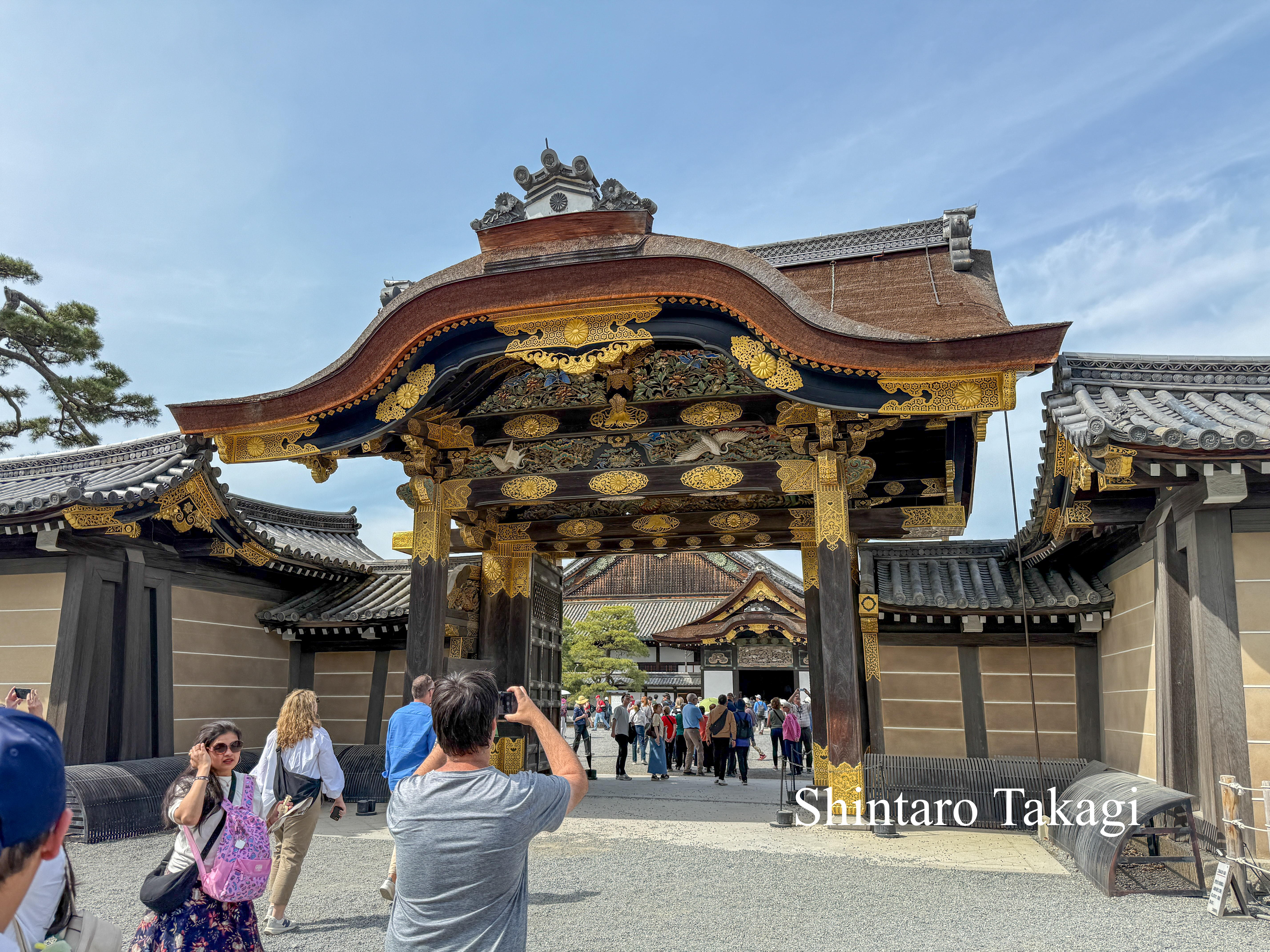
Nijo Castle, Kyoto: The Ultimate Guide to History, Palaces & Nightingale Floors

Forget the typical stone fortress. Nijo Castle in Kyoto (Nijō-jō), a UNESCO World Heritage Site, is the dramatic location that bookends the most powerful military regime in Japanese history: the Tokugawa Shogunate. Built in 1603 by Tokugawa Ieyasu as a symbol of his supreme power, this lavish complex housed the Shogun on his rare visits and was the official start of the Tokugawa dynasty. Crucially, its true historical weight came in 1867, when the final Shogun, Tokugawa Yoshinobu, formally returned governing authority to the Emperor right here. This pivotal event, known as the **Taisei Hōkan**, marked the end of both the Tokugawa Shogunate and the entire Samurai Era, ushering in the birth of modern Japan.

Ninomaru Garden at Nijo Castle.

📜 Historical Significance: Birth and Death of the Tokugawa Shogunate

Nijo Castle's true importance lies in its role as the stage for both the beginning and the end of the powerful Tokugawa Shogunate. In 1603, the mighty Tokugawa Ieyasu built the castle to show his unrivaled power over the Emperor, establishing the military rule that would last for over two and a half centuries. Fast-forward 265 years to 1867, and the castle hosted the single most pivotal event in modern Japanese history: the the **Taisei Hōkan** (Return of Power). Here, the 15th and final Shogun, Tokugawa Yoshinobu, formally announced the return of governing authority back to the Emperor. This monumental decision at Nijo Castle effectively dissolved the Shogunate, ending the feudal age and launching the Meiji Restoration. It is a place where you can truly feel the weight of centuries-long power shift in the very air.

🏰 The Architectural Highlight: Ninomaru Palace and the Nightingale Floors

The centerpiece of Nijo Castle is the stunning **Ninomaru Palace**, a National Treasure. Stepping inside, you are transported to the Shogun’s private world, complete with lavish gold-leaf sliding doors (fusuma) covered in striking murals of tigers and pines by the Kano school—all designed to both impress and intimidate visitors.

However, the palace’s most famous feature is literally underfoot: the 'Nightingale Floors' (Uguisu-bari). These are not simply old, creaky floors; they were deliberately constructed so that when a person walks on them, iron clamps rub against nails, producing a distinct, high-pitched chirp. This brilliant acoustic warning ensured no one could secretly approach the Shogun undetected. Listening to the wood "sing" is an unforgettable, sensory connection to the Shogun's paranoid world. (Note: Photography is prohibited inside the palace).

Ninomaru Garden at Nijo Castle.

🌳 Gardens, Seasonal Beauty, and Scenery

While the palace is a testament to power, the surrounding grounds offer contrasting experiences of natural beauty and incredible seasonal color.

The Gardens

The historic Ninomaru Garden is a classical Shoin-zukuri style landscape with a large central pond and rocks strategically placed to symbolize auspicious animals. By contrast, the **Seiryu-en Garden** (1965) blends Japanese and Western styles, featuring a spectacular collection of ornamental stones and two tea houses—perfect for a peaceful break.

Seasonal Splendor

Nijo Castle is especially famous for its magnificent display of seasonal beauty. The grounds are home to hundreds of **cherry trees** of numerous varieties, making spring a dazzling spectacle and one of Kyoto's premier hanami (flower viewing) destinations. In the late autumn, the area transforms into a fiery canvas as the surrounding maple and ginkgo trees erupt in vibrant reds and golds. Look out for special nighttime illumination events held during both the cherry blossom and autumn foliage seasons!


🗺️ Visitor's Quick Guide

Detail Information
Getting There Kyoto Subway Tozai Line to Nijojo-mae Station (Exit 2).
Admission (Castle + Ninomaru Palace) General Individual: 1,300 yen.
Honmaru Palace Viewing Requires a separate **advance web reservation** and an additional fee: 1,000 yen
Hours 8:45 AM – 5:00 PM (Last entry 4:00 PM).
Best Time to Visit Early morning (8:45 AM) to avoid crowds, especially during spring/fall.
Time Needed Allow 2–3 hours to fully explore the castle grounds and Ninomaru Palace.
Official Website https://nijo-jocastle.city.kyoto.lg.jp/

Wrapping Up Your Visit to Nijo Castle Kyoto

Nijo Castle is more than just a site; it is a profound historical pivot point. From the imposing walls to the intricate security of the Nightingale Floors and the calming beauty of the gardens, it offers a rich, layered experience. Walk these grounds, feel the weight of centuries of power, and connect with the monumental changes that shaped modern Japan.

Sunday, May 4, 2025

Yuki-no-Otani


Yuki-no-Otani, which means “Great Valley of Snow.”
We can enjoy a huge snow valley here for 2 months a year between mid-April and mid-June. 
This place is a part of Tateyama Kurobe Alpine Route, which is a mountain route through Japan Alps with 2,000m altitude with various transportations: railways, cable cars, electric busses, highland bus (this photo), ropeway.
Temperature changes 0.6°C per 100m or 0.33°F per 100 feet and it can be increased in a dry condition. This means at 2,000m altitude 12°C colder.
We can enjoy a nice and cool mountain tour in the middle of summer here. It’s a different side of the mountain range from Kamikochi and we can visit both of them at the same time.

The official site of Tateyama Kurobe Alpine Route: https://www.alpen-route.com/en/

Article by Shintaro Takagi 
Photo by スプププ (Royalty Free Material)

Friday, May 2, 2025

Kyoto on a rainy day


Kyoto on a rainy day.

As a tourist, we might feel we’ve lost a day when it rains during our trip. But don’t be dismayed as Kyoto has some places which can be more beautiful. The contrast of stone pavements and green/autumn leaves is stunningly beautiful with a rain. And moreover, major destinations will be less crowded.

• Higashiyama Area: Sanneizaka, Ninenzaka, Yasaka-no-tou Pagoda (Hokanji Temple), Nene-no-Michi

• Gion Area: Kenninji Temple, Hanamikoji Street, Gion Shirakawa

• Pontocho Street

• Tofukuji Temple and Komyo-in Sub-temple in it

• Sanzen-in Temple

• Arashiyama Area: Togetsukyo Bridge, Jojakkoji Temple, Gioji Temple, Adashino Nenbutsuji Temple, Otagi Nenbutsuji Temple

These places are particularly well-known for the beauty in a rain.

These photos are in Higashiyama Area, Gion Area, Pontocho and surrounding areas.

Photos and article by Shintaro Takagi


Thursday, May 1, 2025

Ninomaru Palace in Nijo Castle


Ninomaru Palace in Nijo Castle, Kyoto, Japan.

In spite of the meaning of this word which means “secondary part,” Ninomaru Palace staged a couple of the biggest incidents in history to be the most important part of the castle. It’s the venue where Tokugawa Shogunate, the last samurai government, was established, and overthrown after 265 years in exactly the same room. 

Photos & article by Shintaro Takagi


Wednesday, April 30, 2025

Yasaka Shrine


 Yasaka Shrine, Kyoto, Japan.

Located in the busiest part of Kyoto, this Shinto Shrine is 1 of the most visited shrine in Japan. Its annual summer festival Gion Matsuri, or Gion Festival, was established in 869 and has more than 1,100 years of history.

The shrine itself is said to be established in 656.

The main hall is designated as a national treasure.


Photo & article by Shintaro Takagi 


Tuesday, April 29, 2025

Izumo-no-Okuni

 The statue of Izumo-no-Okuni.

She’s the establisher of Kabuki Dance, which is considered 1 of the most important theatrical performances in Japan’s culture.

Her statue is at Shijo-Ohashi Bridge along River Kamo in the center of Kyoto City, where she is said to have performed the dance in the end of 16th century to early 17th century. 

At the peak, 7 kabuki theatres were open in this neighborhood, while only 1 left there in the present time, which is Minamiza Theatre.

It was mainly played by women in the early years, but Tokugawa Shogunate, a samurai government, prohibited women to play it in 1629. Ever since, all the roles including female ones have been played by males in Kabuki theatres.


Photo and article by Shintaro Takagi


Kiyomizu-sera with snow


 Kiyomizu-dera Temple, Kyoto Japan.

This is a bit old photo from my library when this temple was covered with snow. It was stunningly beautiful.

This Buddhism temple has so many ancient staircases that it restricts some parts on a snowy day because of the safety concerns. Please stay safe.

This Kiyomizu-dera is 1 of the most popular spots in Kyoto, which is full of people all time. But it was much less crowded on this day because trains were suspended due to the heavy snow. Probably snowy day is a good chance.

Also, the business hour of this popular temple is 6:00 a.m. - 18:00 p.m. or 18:30 p.m. in June and July. When we visit there at 6 a.m., it’s not as crowded as daytime. 

Early morning walk is nice and useful in Kyoto.


Photo & article by Shintaro Takagi 


Monday, April 28, 2025

How to avoid crowds

 Fushimi Inari Tasha Shrine, Kyoto, Japan.

This is such an iconic beautiful place that it’s always full of people. 

How can we avoid crowds in Kyoto?

Except for a few, Shinto shrines are open for 24/7. Actually most of them don’t even have a gate to close. This Fushimi Inari is 1 of them. Technically we can visit there literally anytime. And moreover, this shrine has a train station, Inari Station, and the first train leaves Kyoto Station at 5:33, which arrives at Inari at 5:39. So technically we can get there cheaply before 6:00 a.m. It’s pretty empty at that time there.

Btw, most temples open at 6:00 a.m. and close at 4:00-5:00 p.m., except for some, such as Kinkakuji and Ginkakuji. We can couple this shrine with Kiyomizu-dera Temple in our early walk.


Photos & article by Shintaro Takagi


Sunday, April 27, 2025

Kamikochi


Kamikochi opens today!

Please have a good plan when you visit there!


Kamikochi is a famous wildlife preserve in Matsumoto City, Nagano Prefecture, which is known for the stunning beauty of nature, the birth place of Japan’s modern trekking culture, and the origin place of the name “Japan Alps.”


Kamikochi is closed in winter. 

Transportation opens on April 17th, mainly for the preparation work. It officially opens to the public on April 27th, its grand opening day, and it’s closed on November 15th. 


This place limits private car access in order to protect the environment. Visitors must leave a car in 1 of the 2 designated car parks, Sawando or Hirayu-Akandana, and take a shuttle bus or a taxi from there. 

Tour buses are also available from some major cities: Tokyo, Osaka, Kyoto, Nagoya, Nagano, etc.


This resort is also known to have an Imperial Hotel, which has a dress code. We need to bring and wear something classy inside this hotel.


Please have a good research before you visit there. 


Key attractions 

• Azusa River (this photo)

• Hodaka Mountain Range (this photo)

• 2 ponds: Taisho Pond and Myojin Pond

• 2 wetlands: Tashiro Marsh and Dakesawa Marsh

• Kappa-bashi Bridge

• Walter Weston Memorial Plaque

• Hodaka Jinja Shrine

• Bus Terminal and Information Center 

• 2 Bases with mountain lodges: Tokusawa and Yoko’o


Official Website: https://www.kamikochi.org/


Article by Shintaro Takagi

Photo by akhn (Royalty Free)


 Sanmon Gate of Chion-in Temple, Kyoto, Japan.

Built in 1621, this gate is considered the biggest and the most important architectural achievement as a Buddhism temple gate before Japan’s modernization. (Actually Goeido Gate in Higashi Honganji Temple near Kyoto Station is the biggest traditional temple gate in Japan of all time, but it was rebuilt in 1911 after Japan’s modernization.)

This gate was donated by Tokugawa Hidetada, the 2nd Shogun of Tokugawa Shogunate.

Originally samurai culture had developed in the deep relationships with Zen Buddhism. 2 of 3 Shogunates in Japan’s history had protected Rinzai Sect of Zen Buddhism.

Unlike 2 predecessors, Tokugawa Shogunate, the last Shogunate, protected Jodo Sect, whose headquarters is this Chion-in Temple, and made massive donations during its 264 year reign. This gate and the main hall of this temple were the biggest donations and both of them are now designated as Japan’s national treasures.


Photo & article by Shintaro Takagi 


Toji Temple


 Toji Temple, Kyoto, Japan.

Established in 796, Toji Temple had been the most important and the highest ranked amongst all the Buddhism temples in Kyoto. The leaders of this temple had been the leader of all the Buddhists for approximately 1,000 years since 9th century until Meiji Restoration in 1868.

As a part of UNESCO’s World Heritage Sites, it owns massive important cultural properties including dozens of Japan’s national treasures though all the buildings were burnt down in 1486 and rebuilt in 16th and 17th century. 

This 5-story pagoda was rebuilt in 1644, while the original one was built in 877. 


Photo and article by Shintaro Takagi 


The Ultimate 1-Day Kyoto Itinerary: Course 3: Byodo-in, Nishiki Market, Nijo Castle, Kinkakuji

Kinkakuji Golden Pavilion Summary Welcome to my ultimate itinerary in Kyoto ! This is Kyoto Itinerary Course 3 , a fast-paced guide linking ...